Sermon Notes Proper 14 Year C

So it’s Monday, which means prepping for the coming Sunday.  Here’s what I’m beginning to think about.

Isaiah 1:1, 10-20.  I’ve got to choose between Isaiah and Genesis.

First, I cringe at the sentence, “incense is an abomination to me.”  Fortunately, we still have the Book of Revelation to trump that.

So Isaiah makes me consider that “learning to do good” is what is pleasing to God.  The “Learning” is interesting to me more than the task.  Admittedly, I think a risk here is to be vague without being concrete about what oppression, defense, and “ceasing to do evil” means.  Are Christians oppressed?  If so, how?  Is oppression about being shut out of economic networks?  It is not knowing how to plan for the future?  Most of the time, when my colleagues talk about “oppression” I sympathize, but then I’m not sure what it means.  Getting threatened – sure.  Just feeling bad about yourself?  Not convinced.

When God says, “Let’s argue it out” I wonder about how we talk to God.  What if argument is not about a war of words, but a way of learning how to think through the necessary tasks of doing good and seeking justice.  It mitigates the perfectionist, puritanical impulses of the utopian, making justice about a process of working through the problems.  Also “argument” prefigures the divine “logos” as logos, in Greek, can mean argument.  Jesus is the divine argument.

And then:  there is obedience.  I love preaching about obedience because it’s truly countercultural.  How is obedience different than being oppressed?  Sometimes it’s just easier and more liberating to just do the work you are told to do.  Can you imagine every musician in an orchestra demanding their own voice when rehearsing a symphony?    As the abbot of my order remarked to me:  Obey me in all the small stuff; argue the big stuff.  It makes life a lot simpler.

In Genesis (15: 1-6),  Abram seems a little disappointed in God.  Someone else will inherit his wealth because he has no children.   I think about how “inheritance” works – and what we do inherit from our families – cultures, traditions, wealth.  Those who inherit little are at a disadvantage in the US.  “What do you inherit” and “what will you pass down to your children?” are questions I might ask myself this week.

The passage in Hebrews references Abraham.  I’m struck by the kinds of characters God chooses:  it seems random, and not based on merit.  Rather, he’s the one who is chosen for absolutely no reason, except by faith.  But even that faith is the kind of argumentative sort.  Abraham is not exactly “obedient” but petulant and resentful.

What makes a “home,” a home and where do we find our home? What identifies the heavenly city, and can we find it here – even in NYC, or in the cities where we make our lives.  Perhaps in the school, our libraries, our Saloons, churches, are they places where we have already experienced the kingdom?  How so?

The gospel this week invites reflection about the apocalypse; or what would you do if you knew you were going to die tomorrow?  A month?  A year?  What if you knew that a planet was going to hit Earth (say,  like the movie Melancholia).   I’m also interested in exploring why Jesus says “sell all your possessions and give alms” and why I’m decidedly not going to do that.  Is it because the selling possessions and the end of the world are tightly linked?

I might explore the difference between a human economy and a commercial economy.  A human economy, as I would define it, is one where exchanges are not counted because trust between the different participants is assumed.  A commercial economy, by nature, requires a calculation of goods that are exchanged between strangers.  In both cases, the question is:  why do we trust our families?  Or our coworkers; or our commercial institutions?  What happens when they fail?
Sermon Notes, Proper 13 year C

Just a couple thoughts about preaching this Sunday.

I was wondering about the relationship of the brothers. Is there a way to talk about rivalry and resentment here? Jesus response about greed invites my thinking about Gordon Gekko in the movie Wall Street where he tell students that “greed is good.” How do we express an alternate ethic, and why – when and if greed gives us all sorts of pretty things?

I was thinking about how the purpose of money is, in part, to circulate, to share. This is in contrast with hoarding. The rich man hoards – invests – in food he will not eat to day but in some unspecified date in the future. Instead, Jesus says “eat now.” Bring tomorrow today. It reminds me how I often think that tomorrow is the best day to start a diet, rather than now.

The body needs blood to circulate; the economy needs money to circulate. So what is it that we hoard? What kind of hoarding stultifies our lives? Is it about sentimentality? Is it a critique of attachment? Or is it a warning that we are always idol making creatures, to easily collecting burdens we don’t need to have. Perhaps the message is “keep moving.” Or die.

The Pope’s Remarks

Image

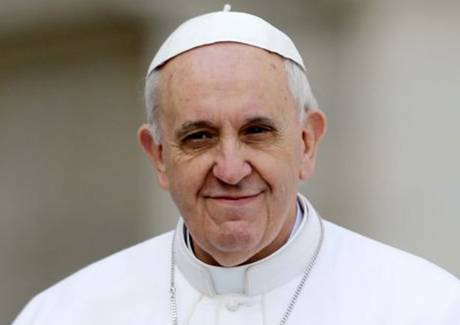
Many people were probably politely surprised at the pope’s reticence toward judging gay people.  It did invite a stronger inquiry in the church’s formal perspective, and it shouldn’t be much of a surprise.  The church has a public doctrine that it  maintains; and then there is pastoral practice, one framed by a monosexual group of privately gay – tolerant men.

The Anglican Church prioritizes pastoral practice:  we begin our understanding with prayer and relationship (or, as ++Rowan once said, doctrine must begin with joy).  Our lens is primarily liturgical rather than doctrinal, which is why some Anglican theologians have said Anglican “doctrine” is in the rubrics:  in how we pray together.  This makes creates an enormous leap to even start talking about sexuality:  how do we pray that, anyway?

Some are a bit upset that Francis remains intractable about women’s ordination.  I think he was simply stating his current vantage point, while also inviting an opening for deeper thinking.  Those outside the church continue to be irritated, but I’m not always sure why people think being a priest is a good thing.  Priests remain ignored by their congregations on most important matters.  Garry Wills even argues it’s a failed vocation.

Nuns, by and large, do a lot of the heavy lifting in the church, and although they have little ecclesial power, their institutions matter equally, if not more so.  Sometimes being seemingly marginalized gives one greater power.

Francis could still appoint a female cardinal.

Trayvon Martin, Notes

I wasn’t surprised by the verdict; it highlights how our legal system makes the lives of young black men expendable.  The simple truth is Martin didn’t deserve what happened to him.  It doesn’t matter how he was walking, what he was saying, or whether or not he was a thug.  He didn’t deserve to die.

So Zimmerman got a trial and was acquitted.  Bless him.  It may be that the verdict was legally correct; and I’m inclined to let a few guilty people go to protect the innocent.  What angers me is that Martin was executed without one. Zimmerman received a privilege that most black men can’t imagine: a second chance.  For in our system, plenty of innocent must plead guilty if only to escape prison culture for a time.

What strikes me as bizarre is the the idea that “standing your ground” could be, in any way, a reasonable course of action to protect oneself.  Why do we think that the worst will necessarily happen to us?  Have we watched too many movies?  Do we really think of other people as so evil that nothing would inhibit them from murdering us?  It’s a worldview that does not reflect the gospel challenge. 

Unlike Zimmerman, we’re not supposed to look for a fight.  Pride and honor be damned, we are inclined not to fight back. 

Now, I imagine exceptions.  Certainly in the end we will all, in an imperfect world, make choices that do not satisfy the demands of the gospel.  Some of us may be part of the state apparatus that that insists violence must be used to establish order.  We may also defend other people who are being harmed.  And I do not deny that some act of resistance may convince the perpetrator that violence is not worth the effort.  This still does not justify proactive revenge.   It requires us to take a risk that to assume we will not be harmed when we are confronted by the foreign, strange or extraordinary. 

There’s a lot of room for us to behave between fleeing and fighting.  But there are times, so to stop the dynamic that makes it easy to kill, we bear the cross.   We don’t stand our ground.   There is no honor lost in running, because for us, honor is irrelevant and unnecessary.  

Is it the hard road?  Yes.  It’s the narrow gate. 

“Stand Your Ground” is not only a conduit for the national sin of white supremacy, but makes violence a sacred space through the law.  All of us who take the gospel seriously should be concerned.  Our work, through our lives, is to show that violence is neither necessary, or holy.   And as best we can, we reject the idea that the death of another person will save us. 

That is what experiencing the cross implies– it happened once, for all time, so that we could see it need not happen again. How hard it is to see, even when again the cross stands before us.  If we could only see.

The Repeal of DOMA

Yesterday I broke open a bottle of champagne with a couple friends, a demi-sec Lanson, in celebration of the Supreme Court decision.

While pleased, I still find it startling when people think of it as a religious issue.  For me it’s a simple matter of fairness about benefits.  Someone else’s choice of partner does not change how I practice or what I believe.  I am not offended if someone calls a partnership a “marriage,” and I find it perplexing when we think that God is worried about these sorts of definitions.   And ff God does have a specific idea about marriage, I’ll make my case before the judgment seat and explain why I have erred on the side of charity and magnanimity for gay people.   I’m not worried – the scriptures say that God is merciful.

There remain ways gay people live outside of marriage that can inform the culture about what a joyful sexuality might look like.  And so I wonder if the conversation on marriage distracts us from some opportunities to understand how we might negotiate our rapidly changing culture.  Although I think marriage is a crucial, imperfect sacramental institution, perhaps we can learn from gay people rather than insist they fit into a less threatening box.

And while all of this is happening, we’re seeing politicians actively attack reproductive health; the economy remains owned by a small class of powerful people; and our decision-making bodies have stalled on climate change.  I find it disturbing that some who are most transforming (damaging?) our economy are the same people who fund marriage equality.  So while I take joy that this symbol – and the benefits – are extended fairly, I hope that this enthusiasm can extend to other important movements upon which the fate of our country, and perhaps the world, depends.

Simon Doonan Holds a Grudge: On the Proper Understanding of Forgiveness

Simon Doonan writes about the healing power of holding a grudge and challenges our “softy” culture.

I understand the sentiment.  Who doesn’t love a grudge?

Fortunately, his description of forgiveness is far from the church’s practice.   Forgiveness should not to diminish the worth of our own suffering, or to make us a nation of push-overs.  Forgiveness- or in the sacraments of the church, absolution – requires a depth of spirit.  For this reason, it is regulated.

Forgiveness cannot be demanded.  One cannot command someone to forgive, just as one cannot tell someone to “feel better.”  That’s emotional manipulation and blackmail.  The victim of a rape cannot be told to forgive; nor can the person’s mother forgive on the victim’s behalf.

Forgiveness also does not substitute for divine justice.  Liberal Christians may define hell all sorts of ways, but let us not forget what it’s there for.  It’s there so that we have a conceptual place for people who are certainly guilty of all sorts of crimes against humanity we cannot imagine doing ourselves, people obviously beyond our moral universe.  It’s there to say to the sociopaths among us that, even if the SEC won’t get you, God will.

For if Simon is saying, let’s us not abandon justice for the sake of forgiveness, he is perfectly right.

Fortunately, that’s not what tradition expects.

We don’t ask for forgiveness on behalf of other people.  If my friend gets murdered, I may ask God for forgiveness for my desire for revenge; but not for my murdered friend’s murderer.  And of course, I may choose instead to let God make whatever decisions about the murderer’s soul.  My hate can be my own.  I’ll let God do the hard work.

Nor should we forgive people who haven’t asked.  We forgive when people seriously and earnestly repent.  When they stop the excuses, the explaining, and recognize their fault and sin, THEN we can begin.  In these cases, the community of faithful people, through the church, may offer absolution.

This does not replace, of course, the demands of the law.

Certainly in the everyday work of living, we will get slighted and bruised.  These do not require forgiveness.  Instead, it is enough that a faithful person learn not to be offended, and to maintain one’s integrity in doing the work of life and seek the magnanimity and joy in life which we believe God wants for us.  An insult to me may merit indifference more than forgiveness.

The church believes in forgiveness, through the sacrament of confession, because it believes it forms a moral conscience, and it limits the damage victims also cause others harm.  We are rarely simply perpetrators or victims; we both cause harm and we receive it.  So t0 forgive has a task: to stop passing victimization along.

To forgive and absolve was handled carefully through the clergy class.   It was understood as a divine act, a gift, an opportunity to begin anew.  God is, by nature, terrifying, fearsome and jealous; the church could be alternately kind and merciful when the penitent came to his or her senses.  It was not meant to be casual or easy, but an opportunity to confirm a sense of right and wrong: a sense of order.

So although grudges are enjoyable, they are rarely helpful. They may have a place in our private imaginations, but they diminish our public life.  Our resentment may be full of error and misplaced pride as much as an expression of injustice.  Holding a grudge cannot replace restoring justice.  I share, for example, Simon’s outrage about the killing of elephants for ivory.  But I am not interested in either forgiveness or holding a grudge.  It should simply stop.  Now.

Our knowledge of goodness and sin are limited.  So we set limits to our behavior and to who has permission to forgive and absolve.  We believe, or hope, that there is eternal justice.  We know we may each be guilty; or vindicated.  But finally we will err on the side of mercy.

After my mother died, however, I ran into a famous poet who had been her mentor.  I’d discovered another time that he’d surreptitiously done great harm to her career.  When he discovered who I was, he said, “I always regretted not giving her the help she deserved.”

I told him to get a priest.

A Litany for the Blessing of a Car

A Car Litany

Priest: Let us pray to the Lord.

Response: Lord, have mercy.

Priest: Lord our God, You make the clouds your conveyance; You travel on the wings of the wind; You sent to your servant Elijah a fiery chariot as a means of conveyance; You guided man to invent this car which is as fast as the wind: Therefore, O Lord, pour now upon it your heavenly blessings. Grant unto it a guardian angel that it may be guided upon the rightful road and be preserved against all harm. Enable those who ride in this car to arrive safely at their destination. For in your ineffable Providence, You are the Provider of all things, and to You we give glory, to the Father and the Son and the Holy Spirit, now and always and for ever and ever. Amen.

Or

Deacon: Let us pray to the Lord

People: Lord have mercy

Priest: O Lord our God, You make the clouds your chariot. You ride on the wings of the wind. You sent to your servant Elias a fiery chariot to carry him up to heaven. You guided man to invent amazing means of transportation.  Therefore, O Lord, we humbly ask You to bless our cars. Send to their drivers Guardian Angels to guide them and to protect them from all harm.  May they arrive safely to their destination through the intercession of Our Lady of Guidance and St. Elias-the-Living and all your saints. For in your ineffable Providence, You are the Provider of all good things and to You we render glory, thanksgiving and worship, Father, Son and Holy Spirit, now and always and forever and ever.  People: Amen

Celebrant, Will you remain attentive, forgoing eating, talking, or texting while driving?

Driver:  I will, with God’s Help

Celebrant:  Will you drive safely at the speed of traffic?

Driver:  I will, with God’s Help

Celebrant:  Will you be sober when you drive, and offer your keys when requested of you?

Driver:  I will, with God’s Help

Celebrant:  Will you forgo rushing red lights or stop signs?

Driver:  I will, with God’s Help

Celebrant:  Will you change lanes safely with space in between your vehicle and others?

Driver:  I will, with God’s Help

Celebrant:  Will you follow cars at a safe distance?

Driver:  I will, with God’s Help

Celebrant:  Will you relax when other drivers show bad judgment?

Driver:  I will, with God’s Help

Celebrant:  Will you pull over and rest when you are tired?

Driver:  I will, with God’s Help

Celebrant:  Will you be humble enough to forgo driving in bad weather?

Driver:  I will, with God’s Help

Almighty God, we give thanks for our reason and skill.  Let us remember that our ability to drive is a risk and that we are to remember the precarity of life in this world.  May all who drive do so with humility, attention and grace, so that we may be able to travel and visit the places we desire to go.

Or

O Lord God, listen favorably to our prayers, bless this …  and send your holy angels, so that all who ride in it may be delivered and guarded from every danger. And as you granted faith and grace to your deacon Philip, and to the man from Ethiopia who was sitting in his chariot and reading Holy Scripture, show the way of salvation to your servants, so that they may, after all the trials of their pilgrimage and life on earth, attain to everlasting joy. Through Christ our Lord. Amen.

AMEN

9/18/2012  The Collect is adapted from a Melkite Prayer; the closing prayer is adapted from a Roman Catholic prayer.

Palm Sunday Evensong Reflection

“Fight the good fight of the faith. Take hold of the eternal life to which you were called and about which you made the good confession in the presence of many witnesses.”  1 Tim 6:12

Palm Sunday, 2013 Evensong

Everyone loves a parade.

Earlier today we began our service parading.  We processed outside, following a bagpiper and carrying palms and singing “All Glory, Laud and Honor.”  It’s movement for the entire congregation from the hall, outside on the sidewalk, and into the sanctuary. 

There is a hint of ridiculousness about it.  I’m in costume, and we’re waving palms,  Following a fellow in a kilt, a festive Gaelic anthem with his pipes.  I think he was Jewish.  Leading us to the doors of the church. 

It’s an expansion of what we do every Sunday, a miniature of the church’s intention.  On most Sundays, the choir and a few ministers, for the sake of efficiency, process on behalf of the entire congregation. The procession itself can be a miniature of our collective walk on earth.  Today we recollect this moment of expectation, hope and celebration.

Most of us love parades, and this one’s a spectacle.  We follow Jesus on a Donkey.  A Donkey.  An ass.  We might not be that organized – it’s spontaneous and festive; they didn’t receive a license from the police department.  Some of the participants are not in line.  Others might be laughing and shouting.  Still others holding back.  Perhaps we are all following him because we are fools; fools for Christ as Paul says.

Many traditions use the metaphor that describes life as a journey. I suspect the intensity of that metaphor reflects our culture’s individualism – we’re out there alone in uncharted territory with only our Good Friend Jesus holding us by the hand, leading us into the sunset of our days until the apocalypse or the end times.  But that view diminishes the way we live together, which is a more chaotic, and less private than we think.  We tend to go where others go, and we follow them, and lead others, and perhaps we don’t give that all that much thought when we’re always thinking of ourselves as individuals.

Many of us have been talking about “leadership” in the church, and it’s true that there’s a lot to be done, and a lot that could have been done if we knew what leadership was supposed to be.  For some it’s charisma; for others it’s taking responsibility; and for others it’s merely having a follower.  But one of the other ideas floating around is called “active followership.”  We’ve got a lot of people who want to lead and need to learn.  But then there are many of us who are just in the parade.  Some of us don’t even know how we got here, but we’re having a good time and going in the same direction.

The letter of Timothy says “fight the good fight.”  This alludes to one aspect of following.  Good followership might mean working, struggling and fighting – engaging – with other people, even your leader.  It means being the sort of follower who knows how to take the initiative and when to be wrong.  It may mean allowing the leader to do the public work a leader does, for almost all the visible work a strong leader accomplishes only happens when there are lots of people supporting the same vision. 

I sometimes say, “my bishop right or wrong.”  Surely some times I’ll find that a difficult place to be.  But I will submit as I’m convinced he’s got the interest of the church, of the world at large, and not merely his own, in mind.  Certainly we will have our differences, but this practice is partially to admit – and I know this will be hard to believe or hear  – I have, sometimes, been wrong.  But the nature of followership, healthy followership, allows me to admit this possibility, and to offer the person I follow the responsibility of making decisions.  

Certainly being a “follower” of Christ is not easy, especially as he’s always asking us who we think he is; but perhaps what makes it bearable is that we – this community here – we are in this ridiculous parade together.

But let’s take care.  Where is Jesus going, anyway?  In the reading, Jesus overturns the tables in the temple.  Today we’re headed – to the temple.  It would be completely reasonable for you to end right there and say you didn’t want to be a part of the parade any more.  Perhaps it might be the reason we sometimes fight with one another:  for the confrontation at the end of the line, the invitation to transformation, are going to be hard places to endure.  But the good fight, one that is shaped by our Lord’s desire to reveal ourselves to ourselves, is how we will be able to stay in the parade and see the work of a changed world that is promised.

It is not all grimness, though the work is hard.  It is not all sourness, though we can be resentful, impetuous and petulant.  But we are led forward, led in a parade, shouting praises.  Sometimes our solemnity and our serious is more like a circus, but we have confidence in our direction.  It might be all we have, now at this time, moments of levity before our Lord is nailed to the cross.  At least we know now what happens after.  We’re graced like that, on the other side of the resurrection; an Easter world.

And everybody loves a parade. 

On Selling our Inheritance

Last June, the General Convention of the Episcopal Church, the organizing body of the esteemed institution that I serve, decided to sell its property on Second Avenue in NYC.  It’s where our Presiding Bishop resides and the central office is located.

Certainly there are some good reasons.  After all, our church is declining and we have little money.  And what do they do there in NY, anyway?  NYC is such an elitist, expensive place, with their snobbish restaurants, cultural activities with foreign artists, and expensive hotels.   They have theater.  An entire theater district.   And we’ve got enough of that, thank you very much.

Couldn’t we sell the building and give all the money to the poor?  To the Sudan.  Just wire transfer it there.  If not the Sudan, then Mali or Honduras.   Just give it away.

I appreciate the sentiment.  It won’t create the changes we seek.

Well meaning people suffer from a few common errors.  The first is from the belief that if we sell our wealth and give it away, we will be doing some good to ourselves and to others.  Perhaps we think that with a little money, the poor would suddenly become the middle class with jobs and houses – in control of their lives.  More likely, we’d merely lose our inheritance, the hard work of our previous generations, and still have lots of poor people.  In addition, we’d also have lost an effective staging area, the organization that can help us transform the relationship of donor to client; giver to receiver.   It takes long term work.  It takes training, advocacy and time.  It means building up relationships and institutions.  Certainly we should reinvent our own organization; but selling our property may only diminish our strength rather than invite us to a shared struggle.

The second is a corollary:  a suspicion of any sort of extravagance.  I respect this – while people are skiing in Vail, others are dying in Syria.  How can anyone have a good time?  Yet, the poor woman generously pours out abundance over Jesus; and then the apostles complain, that money could have been given away.  How can we celebrate the resurrection when there are so many people who are dying needlessly?   We just feted our bishop in NY, and I could hear the occasional people complain about the cost.   We couldn’t even appreciate the party that he was throwing for us.  He’d already become a target.

We are eager to sacrifice, but especially when it’s with money we don’t earn ourselves.  We give the money away, cheaply.   For we aren’t actually making the sacrifices that will ensure our institutions can do effective work; we sell for a song the contributions that previous generations made.  We feel righteous for giving our wealth away; when we are meant to be stewards of wealth we inherited.  Our first step should be to give more; not to buy into financial austerity.

What’s disturbing is the number of many Episcopalians who are also instinctively anti-institutional.  I think this reflects our cultural antagonism toward “institutional” religion.  But this is misplaced:  strong institutions create sustained change.  They represent groups of people of a common mind.    We may identify changes in our culture with individuals or movements; but we forget that there were always organizations that made such work possible.    As our market system becomes more sophisticated, the institutions that make that work possible become invisible.  But they are there.  Social media may make us think  individuals are more effective, but Google, Facebook and Twitter are institutions, not merely platforms.  We are ill served when we forget that.

Certainly the institution of the central office should be held accountable; its administration should be staffed with people who are competent and energetic, who understand that good business practices and institutional power are not, in themselves, bad.  They probably should not be priests, aside from those individuals who must perform the church’s role in public.  But such leadership concerns are altogether of a different sort than the magic we expect from releasing the investments we make.

Our institution does need intentional disorganization and thoughtful reorganization.  But while we are certainly eager to do the former, we have little idea how to do the latter.  And selling prime real estate does not give me confidence in our ability to do so.  To some, the selling signifies prophetic action and deliverance.  But it also reflects our miserliness and desperation.

Emory and the politics of compromise

The president of Emory has gotten quite the ass-kicking for calling the 3/5s rule an example of a good compromise.  I admit, I’m perplexed by the push back in part because I’m skeptical of the counterfactual histories his critics presume.

Certainly the best thing was for all people at all times to recognize the immediate humanity of all people.  It would have been desirable and magnificent if such could have been an option.

But we are far from that time.  Can we know how those founders thought?  Certainly counting blacks completely would have given them some humanity; but it would have mainly strengthened southern power:  they wouldn’t have been able to vote.

The most moral option would have been for Southern States to admit they were wrong and the voting rights of their slaves.  But, however luscious and joyful such an image is, it was probably not an option anyone considered.  Unpropertied white men couldn’t vote either.

Perhaps not counting slaves at all would have been the just option, given they had no real representation.  But in that case, we would not have had a country.  And it also signifies that slaves were not actually people.

I do not think that this compromise was the best world.  In my world, if I were God, all people have always been equal, brilliant, understand evolution, the big bang, and math.  We would all love everyone.  But in a different world, one I do not understand, perhaps the 3/5’s rule was a compromise that was worthy.  One does not need to believe that slavery or the dehumanization of blacks was moral to also acknowledge that we make compromises that are imperfect, frail and open to change.  As this one was.  The better option for blacks at this time – counting as nothing – may have been worse in the long run.  We do not know.

But I do think the president of Emory has been misunderstood by well-meaning people.